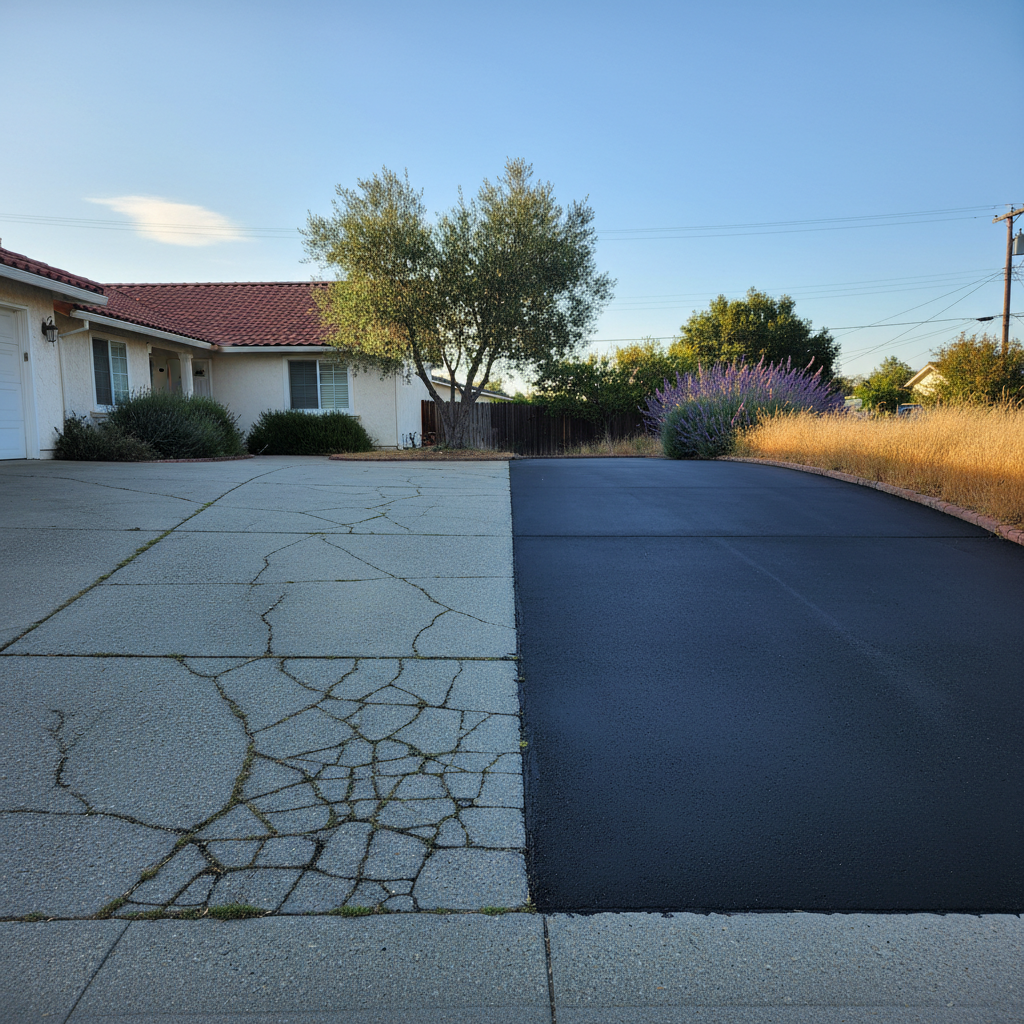
Alright, let's talk about slurry coating. You've probably heard the term, maybe even seen it done. It's a common way to protect and rejuvenate asphalt driveways, especially here in Fremont where the sun can really beat down on our surfaces. But what most folks don't realize is that 'slurry coating' isn't just one thing. There are a couple of main approaches, and picking the right one for your home can make a huge difference in how long it lasts and how good it looks.
Understanding the Two Main Types
When I talk about slurry coating with my clients, I'm usually talking about one of two things: a true slurry seal or an asphalt emulsion sealcoat. They both aim to do similar jobs – protect your asphalt, fill minor cracks, and give it a fresh black look – but they're built differently and perform differently.
Asphalt Emulsion Sealcoat (The 'Standard' Seal)
This is what most people think of when they hear 'sealcoating.' It's a thinner, liquid-based material, usually a mixture of asphalt emulsion, water, mineral fillers, and some additives. It's applied in one or two thin coats.
- Cost: Generally less expensive upfront. It's quicker to apply, and the materials are less costly.
- Durability: It's good for protecting against UV rays, water penetration, and oil spills. You'll typically get 2-4 years out of it before it needs another application, depending on traffic and weather. It's not designed to add structural strength or fill significant depressions.
- Maintenance: Pretty low. Just keep it clean. Reapplication is needed every few years.
- Appearance: Gives a nice, uniform black finish. It can hide minor imperfections but won't level out uneven spots.
- Best Use: Ideal for driveways that are in pretty good shape already, maybe just a bit faded or showing very fine hairline cracks. It's a great preventative measure.
Slurry Seal (The 'Heavy Duty' Option)
Now, a true slurry seal is a different beast. It's a much thicker mix, consisting of asphalt emulsion, fine aggregates (like sand or crushed rock), water, and chemical additives. It's applied in a single, thicker layer.
- Cost: Higher upfront cost than a standard emulsion sealcoat. The materials are more substantial, and the application process is a bit more involved.
- Durability: This is where slurry seal really shines. Because of the aggregates, it adds a wearing course to your driveway. It's much more resistant to traffic wear, provides better skid resistance, and can fill larger cracks and minor surface irregularities. You can expect 5-10 years from a good slurry seal application.
- Maintenance: Similar to emulsion sealcoat, just keep it clean. The longer lifespan means less frequent reapplication.
- Appearance: It gives a rich, dark black finish, but because of the aggregates, it has a slightly coarser texture than the smooth finish of an emulsion sealcoat. It does a better job of evening out minor surface variations.
- Best Use: Excellent for driveways that are showing more wear, have a lot of small to medium cracks (up to about 1/4 inch wide), or just need a more robust protective layer. It's often used on streets and parking lots for its durability.
So, Which One for Your Fremont Driveway?
Here's my honest take, especially considering our local conditions. Fremont's climate, with its hot summers and occasional heavy rains, can be tough on asphalt. We also have a lot of homes built on expansive clay soils, particularly in areas like the Mission San Jose district, which can lead to more movement and cracking in driveways over time.
For most homeowners, if your driveway is relatively new (under 5-7 years old) and in good shape with only minor fading or very fine cracks, an asphalt emulsion sealcoat is a perfectly fine and cost-effective option for preventative maintenance. It'll keep it looking good and protected from the elements for a few years.
However, if your driveway is older, showing more significant cracking, or has a lot of surface wear, I'd lean towards a slurry seal. The added aggregates and thickness provide a much more durable surface that can handle the wear and tear better, especially with our temperature swings and the general stress on surfaces from soil movement. It's a bigger investment upfront, but it pays off in longevity and superior protection. You're essentially getting a mini-overlay that extends the life of your asphalt significantly.
Think of it this way: an emulsion sealcoat is like a fresh coat of paint on a good wall. A slurry seal is more like applying a textured stucco to a wall that needs a bit more help, offering both protection and some structural enhancement.
At Progressive Asphalt Paving, we work with both, and we'll always recommend what we genuinely believe is best for your specific driveway and budget. Don't just go for the cheapest option; consider what your driveway really needs to last in our Fremont environment. A quick assessment can tell us exactly what's up with your asphalt and which treatment will give you the best bang for your buck.